
Getting Your Gas Line Test & Permit: What to Expect
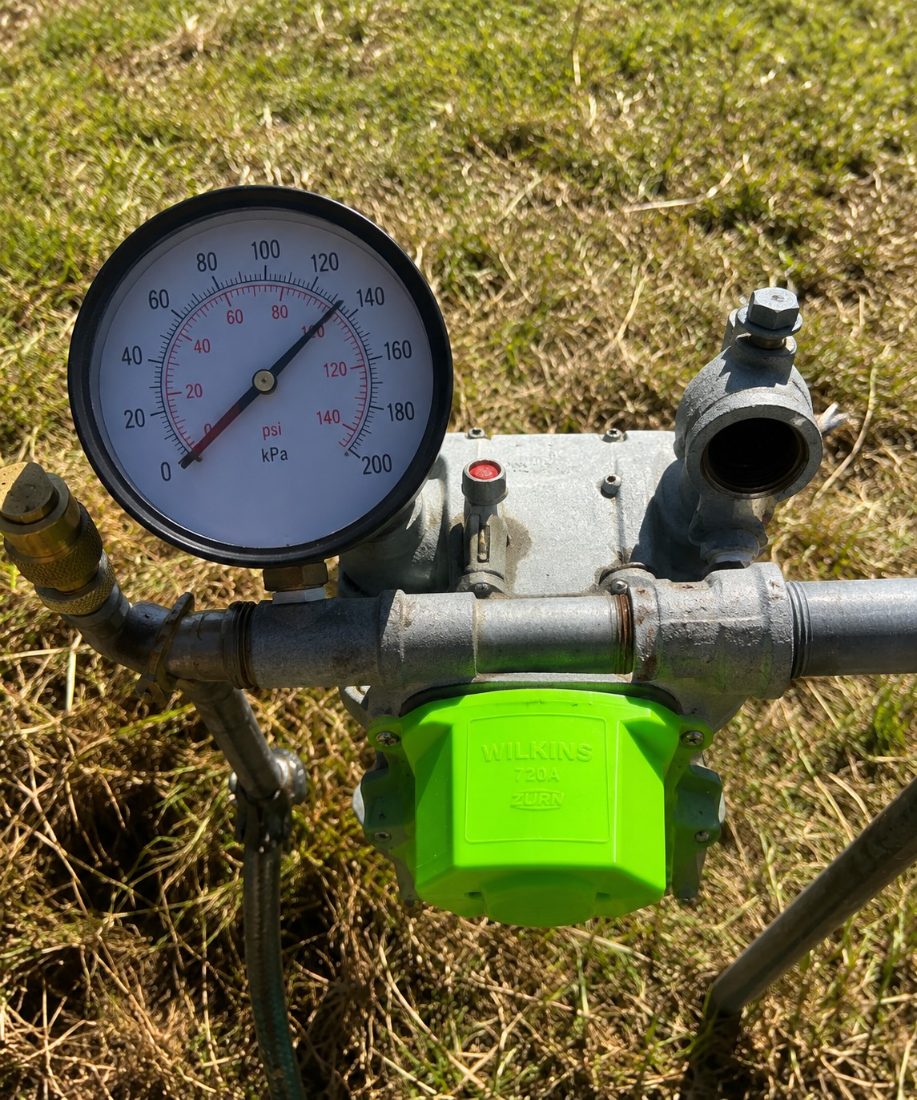
A gas line test (pressure test) confirms your gas piping holds pressure with no leaks. It is typically required after new gas line installation or repairs, when restoring service after the gas has been off, or to pass inspection and get a meter release. A licensed plumber pressurizes the line, monitors the gauge, coordinates the city permit and inspection, and arranges the meter release with your gas provider once it passes.
Gas line work sits in a category all its own. A leaky faucet is an inconvenience; a gas problem is a safety issue, and that single fact shapes everything about how the work is done. Natural gas is safe and reliable when the system is sound — but the only way to know it is sound is to test it. That is what a gas line test and permit process is for, and if you have been told you need one, it helps enormously to understand what is actually happening and why.
Whether you are installing a new gas line, repairing an existing one, restoring service after the gas has been off, or trying to pass an inspection so your provider will turn the meter back on, the steps are similar — and they involve more than just a plumber. They involve your city and your gas provider too. This guide from Buddy's Plumbing walks through what a gas pressure test is, when it is required, how the permit and inspection process works, and exactly what to expect from start to finish in Houston, Texas City, and the surrounding communities.
What Is a Gas Line Test?
A gas line test — often called a gas pressure test — is a controlled check that confirms your gas piping holds pressure with no leaks. The concept is straightforward. A licensed plumber isolates the gas line, pressurizes it with air to a specified level, attaches a gauge, and monitors it for a set period. If the pressure holds steady, the line is tight and there are no leaks. If the gauge drops, gas (or in the test, air) is escaping somewhere, which means there is a leak that must be found and repaired before the system can be put into service.
It is a simple test with a serious purpose: to prove the integrity of the system before live gas flows through it. That is why it is required at the moments when the system's integrity is most in question — after new work, after repairs, or after service has been interrupted.
When Is a Gas Pressure Test Required?
You do not test a gas line on a whim — it is required at specific trigger points. The most common are:
After a New Gas Line Installation
Any time a new gas line is run — for a new appliance, an addition, an outdoor kitchen, a pool heater, or new construction — it must be tested and inspected before the gas provider will connect it. The test proves the brand-new piping was assembled correctly and holds pressure.
After Repairs or Modifications
If an existing gas line is repaired, extended, or altered, the affected work generally has to be tested to confirm the modification is leak-free. Replacing a section of gas line falls squarely into this category.
When Restoring Service After the Gas Has Been Off
This is one of the most common reasons homeowners encounter a gas test unexpectedly. If your gas has been shut off — because of non-payment, a move into a new home, a remodel, or a safety shut-off — your provider will often require the line to pass a pressure test before they restore service. They want assurance that nothing has changed and the system is still tight before they send gas back through it.
To Pass Inspection and Get a Meter Release
Ultimately, many of these situations come down to one goal: a meter release, where the gas company turns the service back on at the meter. Providers generally will not release the meter until the line has passed its test and any required city inspection. The test and permit are the gatekeepers to getting your gas flowing.
Why a Permit Is Part of the Process
Because gas work affects safety, cities require permits and inspections for new gas lines, replacements, and many repairs. A permit is not bureaucratic busywork — it is the mechanism that ensures the work is performed to code and independently verified. When a permit is pulled, the city sends an inspector to confirm the installation meets safety standards before the system goes live.
Trying to skip the permit to save time or money is a costly mistake. Unpermitted gas work can create genuine safety hazards, and it can come back to haunt you when you sell your home, file an insurance claim, or have any future work inspected. A licensed plumber handles the permit as a normal part of the job — pulling it, performing the work to code, and meeting the inspector — so you are covered and compliant. This is one of the clearest reasons gas work should never be a DIY project or handed to an unlicensed handyman.
What to Expect: The Process Step by Step
Here is how a typical gas line test and permit job unfolds when you call a licensed plumber.
1. Assessment and Permit
First, your plumber evaluates the situation — what work is needed, what the city requires, and what your gas provider requires for a meter release. They then pull the appropriate permit with the city. Knowing exactly which permit and which inspection apply is part of the expertise you are paying for; it keeps the job moving without missteps.
2. Any Necessary Repairs or Installation
If you are installing a new line or replacing a section, that work is completed to code first. If the job is purely a test to restore service, this step may be as simple as preparing the existing line for pressurization.
3. The Pressure Test
The plumber isolates and pressurizes the gas line, attaches a gauge, and monitors it for the required period. A steady gauge means the line holds. If the pressure drops, there is a leak — and rather than a setback, this is the test doing exactly its job. The plumber locates the leak, repairs or replaces the affected section, and re-tests until the line passes.
4. City Inspection
With the line holding pressure, the city inspector verifies the work meets code. Because a licensed plumber performed the job to standard and pulled the proper permit, this step is typically a smooth confirmation rather than a hurdle.
5. Meter Release and Restored Service
Once the line passes the test and inspection, the plumber coordinates the meter release with your gas provider. The provider turns the gas back on at the meter, and your service is restored — safely and properly. At Buddy's Plumbing, we manage this coordination between you, the city, and the gas company so you are not left chasing three different parties to get your gas back.
What Happens If the Line Fails the Test?
It is worth saying plainly, because homeowners often worry about it: a failed pressure test is not a disaster — it is the system working. The entire reason we test is to catch leaks before live gas is introduced. If the line does not hold, the plumber finds the leak, repairs or replaces the bad section, and tests again. You end up with a verified, leak-free system, which is exactly the outcome you want. A test that finds a problem has very likely prevented a far more serious one.
Why This Is a Job for a Licensed Plumber
Gas is not a place to cut corners or experiment. The combination of safety stakes, code requirements, permitting, inspections, and provider coordination puts gas line testing firmly in licensed-professional territory. A licensed plumber brings several things to the table that matter:
- Safety expertise — the training to work with gas systems correctly and recognize hazards.
- Code knowledge — performing the work to the standards inspectors require, the first time.
- Permit handling — pulling the right permit and meeting the inspector so you do not have to navigate the city alone.
- Provider coordination — arranging the meter release so your service is restored without you bouncing between parties.
- Accountability — licensed, insured work you can stand behind when you sell or insure your home.
At Buddy's Plumbing, all of our gas line services — including gas testing with permit — are performed under the supervision of Licensed Master Plumber Daniel Nevarez, RMP #M41042. We are fully insured, and we handle the entire process end to end.
How to Prepare for Your Gas Test
You do not need to do much, but a few things help the job go smoothly:
- Know your situation. Be ready to tell your plumber why you need the test — new line, repair, restoring service, or a provider requirement.
- Have provider details handy. Your gas account information helps coordinate the meter release.
- Provide access. The plumber and inspector will need access to your gas meter, appliances, and any work areas.
- Ask questions up front. A good plumber will explain the timeline, the permit, and the cost clearly before starting.
A Note for Homeowners and Businesses in Our Area
Gas line testing comes up more often than most people expect, and timing matters. If you are buying a home in Houston or Texas City and the gas has been off, you will likely need a passing pressure test before the provider restores service — so it is worth scheduling early in your move rather than discovering it the day you want hot water and a working stove. The same is true for rental properties between tenants, where service is frequently shut off and must be re-established with a test.
Remodels and additions are another common trigger. Adding a gas range, a tankless water heater, a pool heater, a fireplace, or an outdoor kitchen means new gas piping, which means a test, a permit, and an inspection before it can be used. Planning that work with a licensed plumber from the start keeps the project on schedule and avoids the frustration of a finished kitchen that cannot be turned on. For local businesses — restaurants especially — gas systems are essential to daily operation, and a properly permitted, tested, and inspected system protects both your staff and your ability to stay open. Whatever the trigger, building the test and permit into your timeline from the beginning is always smoother than scrambling for it at the end.
The Bottom Line
A gas line test and permit can feel like a maze of steps — pressurize, inspect, permit, meter release — but each one exists for the same reason: to make sure the gas flowing into your home does so safely. When you work with a licensed plumber, that maze becomes a single, managed process. You get a verified, leak-free system, code-compliant work, and your service restored properly.
Buddy's Plumbing has handled gas line testing, repairs, and replacement across Houston, Texas City, and the surrounding communities since 1967. We pull the permits, perform the work to code, coordinate the inspection, and arrange the meter release with your provider — all with a clear, flat-rate quote before any work begins, and all under the supervision of Licensed Master Plumber Daniel Nevarez, RMP #M41042. Need a gas test, permit, or meter release handled the right way? Call your Buddy — we answer 24/7.
Need a licensed plumber you can trust?
Family-owned since 1967 · Licensed Master Plumber #M41042 · Flat-rate pricing · Available 24/7